

Sunday, July 31, 2011

Friday, July 29, 2011

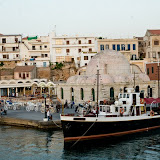
CHANIA HOLIDAYS BY BEST OF GREECE HOLIDAYS
Best of Greece Holidays has been offering holiday packages to Greece & the Greek Islands since 1973. www.bestofgreece.co.uk
Book your Chania Holidays with us!
http://www.bestofgreece.co.uk/el/locations/best_of_crete_chania_holidays
Chania Holidays is something you will never forget. http://www.bestofgreece.co.uk/el/locations/best_of_crete_chania_holidays
Chania port, is located on the North coast of the island on the Western Side of Crete. This side of the island is a lot calmer than the Eastern side of the Island. The tourism in this region is picking up but due to its distance from the famous archaeological sites and lack of long sandy beaches right by the city centre, famous resorts have settled on the other side of the island.
This city is the second largest on Crete. It was for a while the Capital of Crete but the title was given back to Iraklion in the early 1970s. Its old town is a beautiful blend of Venetian architecture, lively café culture, intoxicating aromas and character. It has been claimed the most attractive city on Crete, with the backdrop of Mountains and extensive views of the Mediterranean. The combination of the Modern with the old town definitely adds to its character and uniqueness. The Modern part of the city is spread out with spacious roads, while the old town is a combination of narrow alleys and half derelict Venetian buildings that survived the wartime. The Old town area is relatively small and mainly along the sea front.
This area even due to its remote location from beaches and the main sites, is home to some resorts, luxury hotels as well as camping sites and even youth hostels. So you will be able to find whatever type of accommodation you are looking for. You can even find a few places in the Old Town!
A little bit about Crete:
Crete is approximately 2 and a half times the size of Majorca. It is the biggest and most southerly Greek Island in the Mediterranean. The Island has numerous beaches, magnificent mountains, luscious valleys, tiny villages, large cities, fortresses, archaeological sites, unique customs and fantastic History. Due to the island's diversity and its size Cretans feel that it is a state in its own right. This is also emphasised by the fact that locals speak a slightly different dialect of Greek.
Crete was home to the first European Civilisation, the Minoans, who ruled the island as early as 2000 BC. Their history and influence on the island as well as on the island's culture is evident everywhere.
It is truly an amazing place, a little land of its own. One that is full of places to discover, things to see and do. It also offers the largest variety of what ever you would expect to find on a Greek Island. Your Holidays in Chania will be something you will forever cherish.
http://www.bestofgreece.co.uk/el/locations/best_of_crete_chania_holidays
Chania
In the Old Town within the Kasteli District there are signs of life dating as far back as the Neolithic Era. However, as with most areas of Crete, Chania was also a Minoan City.
After the Minoan period Chania became an important city-state Capital in Classical Greece. Its domain stretched from the waterfront to the feet of the White Mountains. Its name was Kydonia and it was constantly at war with other Cretan states. It even issued its own coins in the 3rd Century AD.
The area was further occupied by Arabs during the Byzantine Era. This period isn't very well documented, however around 961 BC the Byzantine Empire took control once again of the city and fortified it to prevent the further invasion of the Arabs.
After the fall of the Byzantine Empire within the region the island was then sold to the Venetians for mere 100 silver marks. To begin with the Venetian rule was strict and oppressing however, the relations between them improved and their cultures intertwined.
The walls that had been built to keep the Arabs out did not stand the force of the Ottoman Empire, so in 1645 the Ottoman Empire took over the area that was now flourishing under Venetian rule. The Greeks eventually rose against the Empire in 1821. The conflicts between the Turks and the Greeks in Chania led to losses from both sides.
In 1898 steps were put into motion to unite Crete with the rest of Greece. Chania remained a semi-autonomous state during the negotiations. However it wasn't until 1913 that Crete became officially part of Greece. This is another reason why the Cretans feel that Crete is an autonomous state.
A little bit of Cretan History:
Crete is where the earliest of Europe's civilizations, the Minoans, settled, however, there are signs that life has existed on Crete for more than 130,000 years. As many people have heard that the Minoans spread and took over other islands as well as parts of Mainland of Greece. There is evidence that they were incredibly advanced for their time and were in the centre of the Maritime Trade from 2000BC. It is said that this civilization survived various natural disasters that destroyed, homes, palaces, which they rebuilt and some of them remain for us to admire today.
The Island has seen a lot of changes, a lot of civilizations and different occupations. The Island has been ruled by its own people, the Minoans and the Mycenae. It has been taken over by the Venetians and the Ottoman Empire. In more recent years it was split into four sectours between the UK, Italy, Russia and France when they were fighting to maintain their power of the Island.
This land's history is packed with tales of Mythology. It is claimed that the father of all the Olympian Gods, Zeus, was born on this tremendous island, on Mount Ida. Zeus also destroyed a giant Lizard that was threatening the Island. Crete is also where the tales of the Minotaur derive.
The bull was worshipped by the Minoans and it was celebrated in the construction of palaces like Knossos. There are a few variations of the myth about the Minotaur and the Labyrinth. The best known includes the Prince Theseus, a very complicated maze and the death of the Minotaur at the hand of Theseus.
http://www.bestofgreece.co.uk/el/locations/best_of_crete_chania_holidays
Knossos
This is probably the most famous site on this enormous island. It is approximately 140 km from Chania so it is quite a drive or bus ride but if you make the trip you will not be disappointed. The area was first inhabited in 7000 BC; the palace that remains however was rebuilt in 1350 BC after being destroyed in 1700 BC. The construction itself was excavated in on several occasions beginning in the late 1800s and ending in 1931. The site is huge and in excellent condition. You can always tag along side one of the tour groups wandering around the palace and site, in case you miss something.
Chania
Museums:
-Nautical Museum of Crete
This museum houses a collection of model ships, as well as other naval ephemera showing the history of Greek Navigation. There is also a section on the battle of Crete in 1941.
-Byzantine Museum
The collection is not huge, but it is very interesting. It has a collection of mosaics, icons and jewellery from this period.
- Archaeological Museum
This museum has in its collection a number of artefacts including:
- Minoan finds from Chania
- Prehistoric finds from caves
- Minoan items from various sites in the prefecture
- Finds from graves of the Geometric period
- Finds from the city of Chania, dated to historic times
- Finds from other towns of the Chania prefecture
- Coins, Jewellery, Sculpture, inscriptions & Mosaics
You should also walk around the city and visit the Mosque of Janissaries, the Cathedral, the Minoan Excavation and the Centre of Traditional Folk Art and Culture.
Sports:
Water sports are very popular in this region especially Water polo. The Team from Chania have remained in the primary league of the Greek National Teams for decades.
There is also a very active mountaineering, rock climbing and walking society. Check out the Chania Mountaineering Club.
Things to do
Beaches
The Beaches of this Town lie on the West part of the Town. The closest beach is the city beach, it is crowded but clean.
-Golden Beach, 1 km from the city centre, it is as its name long golden sandy beach, but because of its close position to the city it becomes very crowded.
-Agioi Apostoloi Beach is to the West about 7km and is a sandy beach that is in total about 3 coves.
-Further along is Kalamaki Beach another sandy one.
There are many beaches in the region but there are not many ones that are very close by. Please check with your hotel or the locals for the best places to swim because this constantly changes and the locals always know a few more secrets,
Shopping:
There is a wide selection of little shops selling traditional Cretan artwork, leather, jewellery, embroidery, woven goods and replicas of artefacts and Icons. You will also find a number of larger shops in this city, clothes shops, accessories, shoes, beauty items, books etc. If you come across some local products, grab a jar of honey, a bottle of Cretan wine and if you can some of the local cheese.
You should also take a walk through the Agora (the market) and have a look around at what is on offer.
SAMARIA GORGE
Samaria Gorge is located 43 km from the city of Chania so it would take approximately one hour to get there by car. It is a unique experience to take a hike in this gorge and is something you will carry with you forever. It would take about 4-6 hours depending on how quick you are to pass through the "Samaria Gorge". We suggest you start very early in the morning before it becomes too hot.
Chania has a good reputation for its Nightlife and a perfect place for your Greek Island Holidays. Being a good size city it has a lot to offer the visitors and the locals. The west side of the Town is where the party happens. The streets are filled with young people walking around, going into to bars, clubs, etc. This is the lively side of town. People party to all hours of the morning. The bars and clubs play all sorts of music, anything from Cuban to Live Greek Music. Take your pick and wander on in and enjoy yourself.
Of course there are areas within the town that are low key where you can enjoy a quiet drink by the sea front.
Where to wine and dine:
Crete is known for its delicious and fresh food. You must try the local food and ask for what is traditional in
Chania. Grab a glass of chilled raki or a nice cold beer.
There are a number of restaurant and tavernas along the Harbour; these are slightly pricey. The cheaper more traditional food is found in the back streets and around the Market (Agora). If you want a light dinner you can grab a snack in a café or go to an ouzeri and have some meze with a glass of ouzo or local wine.
Enjoy your holidays in Crete! Best of Chania Holidays www.bestofgreece.co.uk
Book your Chania Holidays with us!
http://www.bestofgreece.co.uk/el/locations/best_of_crete_chania_holidays
Chania Holidays is something you will never forget. http://www.bestofgreece.co.uk/el/locations/best_of_crete_chania_holidays
Chania port, is located on the North coast of the island on the Western Side of Crete. This side of the island is a lot calmer than the Eastern side of the Island. The tourism in this region is picking up but due to its distance from the famous archaeological sites and lack of long sandy beaches right by the city centre, famous resorts have settled on the other side of the island.
This city is the second largest on Crete. It was for a while the Capital of Crete but the title was given back to Iraklion in the early 1970s. Its old town is a beautiful blend of Venetian architecture, lively café culture, intoxicating aromas and character. It has been claimed the most attractive city on Crete, with the backdrop of Mountains and extensive views of the Mediterranean. The combination of the Modern with the old town definitely adds to its character and uniqueness. The Modern part of the city is spread out with spacious roads, while the old town is a combination of narrow alleys and half derelict Venetian buildings that survived the wartime. The Old town area is relatively small and mainly along the sea front.
This area even due to its remote location from beaches and the main sites, is home to some resorts, luxury hotels as well as camping sites and even youth hostels. So you will be able to find whatever type of accommodation you are looking for. You can even find a few places in the Old Town!
A little bit about Crete:
Crete is approximately 2 and a half times the size of Majorca. It is the biggest and most southerly Greek Island in the Mediterranean. The Island has numerous beaches, magnificent mountains, luscious valleys, tiny villages, large cities, fortresses, archaeological sites, unique customs and fantastic History. Due to the island's diversity and its size Cretans feel that it is a state in its own right. This is also emphasised by the fact that locals speak a slightly different dialect of Greek.
Crete was home to the first European Civilisation, the Minoans, who ruled the island as early as 2000 BC. Their history and influence on the island as well as on the island's culture is evident everywhere.
It is truly an amazing place, a little land of its own. One that is full of places to discover, things to see and do. It also offers the largest variety of what ever you would expect to find on a Greek Island. Your Holidays in Chania will be something you will forever cherish.
http://www.bestofgreece.co.uk/el/locations/best_of_crete_chania_holidays
Chania
In the Old Town within the Kasteli District there are signs of life dating as far back as the Neolithic Era. However, as with most areas of Crete, Chania was also a Minoan City.
After the Minoan period Chania became an important city-state Capital in Classical Greece. Its domain stretched from the waterfront to the feet of the White Mountains. Its name was Kydonia and it was constantly at war with other Cretan states. It even issued its own coins in the 3rd Century AD.
The area was further occupied by Arabs during the Byzantine Era. This period isn't very well documented, however around 961 BC the Byzantine Empire took control once again of the city and fortified it to prevent the further invasion of the Arabs.
After the fall of the Byzantine Empire within the region the island was then sold to the Venetians for mere 100 silver marks. To begin with the Venetian rule was strict and oppressing however, the relations between them improved and their cultures intertwined.
The walls that had been built to keep the Arabs out did not stand the force of the Ottoman Empire, so in 1645 the Ottoman Empire took over the area that was now flourishing under Venetian rule. The Greeks eventually rose against the Empire in 1821. The conflicts between the Turks and the Greeks in Chania led to losses from both sides.
In 1898 steps were put into motion to unite Crete with the rest of Greece. Chania remained a semi-autonomous state during the negotiations. However it wasn't until 1913 that Crete became officially part of Greece. This is another reason why the Cretans feel that Crete is an autonomous state.
A little bit of Cretan History:
Crete is where the earliest of Europe's civilizations, the Minoans, settled, however, there are signs that life has existed on Crete for more than 130,000 years. As many people have heard that the Minoans spread and took over other islands as well as parts of Mainland of Greece. There is evidence that they were incredibly advanced for their time and were in the centre of the Maritime Trade from 2000BC. It is said that this civilization survived various natural disasters that destroyed, homes, palaces, which they rebuilt and some of them remain for us to admire today.
The Island has seen a lot of changes, a lot of civilizations and different occupations. The Island has been ruled by its own people, the Minoans and the Mycenae. It has been taken over by the Venetians and the Ottoman Empire. In more recent years it was split into four sectours between the UK, Italy, Russia and France when they were fighting to maintain their power of the Island.
This land's history is packed with tales of Mythology. It is claimed that the father of all the Olympian Gods, Zeus, was born on this tremendous island, on Mount Ida. Zeus also destroyed a giant Lizard that was threatening the Island. Crete is also where the tales of the Minotaur derive.
The bull was worshipped by the Minoans and it was celebrated in the construction of palaces like Knossos. There are a few variations of the myth about the Minotaur and the Labyrinth. The best known includes the Prince Theseus, a very complicated maze and the death of the Minotaur at the hand of Theseus.
http://www.bestofgreece.co.uk/el/locations/best_of_crete_chania_holidays
Knossos
This is probably the most famous site on this enormous island. It is approximately 140 km from Chania so it is quite a drive or bus ride but if you make the trip you will not be disappointed. The area was first inhabited in 7000 BC; the palace that remains however was rebuilt in 1350 BC after being destroyed in 1700 BC. The construction itself was excavated in on several occasions beginning in the late 1800s and ending in 1931. The site is huge and in excellent condition. You can always tag along side one of the tour groups wandering around the palace and site, in case you miss something.
Chania
Museums:
-Nautical Museum of Crete
This museum houses a collection of model ships, as well as other naval ephemera showing the history of Greek Navigation. There is also a section on the battle of Crete in 1941.
-Byzantine Museum
The collection is not huge, but it is very interesting. It has a collection of mosaics, icons and jewellery from this period.
- Archaeological Museum
This museum has in its collection a number of artefacts including:
- Minoan finds from Chania
- Prehistoric finds from caves
- Minoan items from various sites in the prefecture
- Finds from graves of the Geometric period
- Finds from the city of Chania, dated to historic times
- Finds from other towns of the Chania prefecture
- Coins, Jewellery, Sculpture, inscriptions & Mosaics
You should also walk around the city and visit the Mosque of Janissaries, the Cathedral, the Minoan Excavation and the Centre of Traditional Folk Art and Culture.
Sports:
Water sports are very popular in this region especially Water polo. The Team from Chania have remained in the primary league of the Greek National Teams for decades.
There is also a very active mountaineering, rock climbing and walking society. Check out the Chania Mountaineering Club.
Things to do
Beaches
The Beaches of this Town lie on the West part of the Town. The closest beach is the city beach, it is crowded but clean.
-Golden Beach, 1 km from the city centre, it is as its name long golden sandy beach, but because of its close position to the city it becomes very crowded.
-Agioi Apostoloi Beach is to the West about 7km and is a sandy beach that is in total about 3 coves.
-Further along is Kalamaki Beach another sandy one.
There are many beaches in the region but there are not many ones that are very close by. Please check with your hotel or the locals for the best places to swim because this constantly changes and the locals always know a few more secrets,
Shopping:
There is a wide selection of little shops selling traditional Cretan artwork, leather, jewellery, embroidery, woven goods and replicas of artefacts and Icons. You will also find a number of larger shops in this city, clothes shops, accessories, shoes, beauty items, books etc. If you come across some local products, grab a jar of honey, a bottle of Cretan wine and if you can some of the local cheese.
You should also take a walk through the Agora (the market) and have a look around at what is on offer.
SAMARIA GORGE
Samaria Gorge is located 43 km from the city of Chania so it would take approximately one hour to get there by car. It is a unique experience to take a hike in this gorge and is something you will carry with you forever. It would take about 4-6 hours depending on how quick you are to pass through the "Samaria Gorge". We suggest you start very early in the morning before it becomes too hot.
Chania has a good reputation for its Nightlife and a perfect place for your Greek Island Holidays. Being a good size city it has a lot to offer the visitors and the locals. The west side of the Town is where the party happens. The streets are filled with young people walking around, going into to bars, clubs, etc. This is the lively side of town. People party to all hours of the morning. The bars and clubs play all sorts of music, anything from Cuban to Live Greek Music. Take your pick and wander on in and enjoy yourself.
Of course there are areas within the town that are low key where you can enjoy a quiet drink by the sea front.
Where to wine and dine:
Crete is known for its delicious and fresh food. You must try the local food and ask for what is traditional in
Chania. Grab a glass of chilled raki or a nice cold beer.
There are a number of restaurant and tavernas along the Harbour; these are slightly pricey. The cheaper more traditional food is found in the back streets and around the Market (Agora). If you want a light dinner you can grab a snack in a café or go to an ouzeri and have some meze with a glass of ouzo or local wine.
Enjoy your holidays in Crete! Best of Chania Holidays www.bestofgreece.co.uk
"Zorba the Greek" director has left us at the age of 89
Since 1973 Best of Greece has been selling tailor made package holidays to Greece & the Greek Islands! Who will you trust when travelling to Greece other than the oldest tour operator in the UK for Greece Holidays? www.bestofgreece.co.uk
Final farewell for "Zorba the Greek" director

ATHENS — Greece's art and film community bid a final farewell Thursday to Greek-cypriot director Michael Cacoyannis, best known for the hit film "Zorba the Greek", who died in Athens aged 89.
Composer Mikis Theodorakis, who did the music for a number of Cacoyannis' films, was in the front row of mourners at the Orthodox ceremony in a central Athens church strewn with white flower crowns sent by friends and fans.
"Today we say goodbye to a great creator who brought Greek culture to the rest of the world," Education Minister Anna Diamantopoulou told the solemn gathering.
She hailed Cacoyannis' cinematic achievements but also his work in theatre and cinema education via a foundation he created in Athens.
Also present were Greek and Cypriot political representatives, other directors and actors like Antonis Kafetzopoulos, Costas Ferris and Constantin Giannaris.
Dimitris Papaioannou, choreographer of the opening and closing ceremonies of the 2004 Athens Olympics, was also present.
Greek actress Irene Papas told Greek media that Cacoyannis had joined "the grand theatre of the immortals", while Ta Nea newspaper said the director, through Zorba the Greek, "did more for Greece than any tourism bureau in the world".
Born in Cyprus on June 11, 1922, Cacoyannis shot to fame with the triple-Oscar winning "Zorba the Greek" in 1964, an adaptation of the Nikos Kazantzakis-penned novel which starred Anthony Quinn, Alan Bates and Irene Pappas among others.
He was also feted for the film "Electra", based on the Euripides tragedy, which received two awards at Cannes in 1962.
The director died at the central Evangelismos hospital on Monday where he was admitted 10 days earlier.
WWW.BESTOFGREECE.CO.UK
Final farewell for "Zorba the Greek" director

ATHENS — Greece's art and film community bid a final farewell Thursday to Greek-cypriot director Michael Cacoyannis, best known for the hit film "Zorba the Greek", who died in Athens aged 89.
Composer Mikis Theodorakis, who did the music for a number of Cacoyannis' films, was in the front row of mourners at the Orthodox ceremony in a central Athens church strewn with white flower crowns sent by friends and fans.
"Today we say goodbye to a great creator who brought Greek culture to the rest of the world," Education Minister Anna Diamantopoulou told the solemn gathering.
She hailed Cacoyannis' cinematic achievements but also his work in theatre and cinema education via a foundation he created in Athens.
Also present were Greek and Cypriot political representatives, other directors and actors like Antonis Kafetzopoulos, Costas Ferris and Constantin Giannaris.
Dimitris Papaioannou, choreographer of the opening and closing ceremonies of the 2004 Athens Olympics, was also present.
Greek actress Irene Papas told Greek media that Cacoyannis had joined "the grand theatre of the immortals", while Ta Nea newspaper said the director, through Zorba the Greek, "did more for Greece than any tourism bureau in the world".
Born in Cyprus on June 11, 1922, Cacoyannis shot to fame with the triple-Oscar winning "Zorba the Greek" in 1964, an adaptation of the Nikos Kazantzakis-penned novel which starred Anthony Quinn, Alan Bates and Irene Pappas among others.
He was also feted for the film "Electra", based on the Euripides tragedy, which received two awards at Cannes in 1962.
The director died at the central Evangelismos hospital on Monday where he was admitted 10 days earlier.
WWW.BESTOFGREECE.CO.UK
Thursday, July 28, 2011
CHANIA, TRAVEL TO CRETE, GREECE CHANIA HOLIDAYS
Holidays in Crete will not be complete unless you visit the beautiful traditional and picturesque town of Chania!
Holidays in Chania will truly be something you will cherish! The port the town the little streets will amaze you!
http://www.bestofgreece.co.uk/el/locations/best_of_crete_chania_holidays
Since 1973 we have been selling holidays to Chania! Book with the leading specialist in holidays to Greece & the Greek Islands!
www.bestofgreece.co.uk

An article from Visitgreece.gr
Prefecture of Chania
The Prefecture of Chania (also spelled Haniá) is the western most division of the island of Crete. The Prefecture of Rethymno forms its eastern border, whilst sea lap its remaining areas. The inhabited islands of Gavdos and Gavdopoula, which are located at a distance of 20 miles south from Chania, in Liviko Sea, also come under Chania.
The major cities of the prefecture are Chania, the capital of the prefecture, and Kastelli in Kisamos. Among the most important villages are Paleochora and Kantanos in Selino, the Chora of Sfakion in Sfakia.
The Prefecture of Chania provides tourist services and activities of all kinds, satisfying all the choices. The city of Chania maintains unaltered all of its characteristics, from the time of the Venetian Rule up until today.
The region of Chania is dominated by the impressive White Mountains (in Greek: Lefká Óri) and its famous National Park, which occupy the largest part of the region.
The White Mountains’ National Park, expanding around Samaria Gorge, is the biggest and most imposing gorge in Greece. You need about seven hours to cross it but the rich landscape and rare flora and fauna will definitely reward you. There are also many other smaller gorges for you to hike (Aradaina, Agia Irini, Imbros and Polyrhenia) as well as beautiful walking trails (from Hrysoskalitissa to Elafonissi, from Palaiohóra to Souyiá and from Ayia Rouméli to Hóra Sfakion), which make Chania a beloved destination among nature enthusiasts from all over the world. On the edge of a gloriously scenic turquoise lagoon lies the islet of Elafonissi with its ancient-old Cedar Forest.
Need more action? Go mountaineering on White Mountains (there are 4 shelters), climbing on the amazingly vertical slope of Mt. Gigilos, or canoying down the Kládos, Sapounás and Thérissos gorges.
Turquoise waters lap against the white sandy beaches, that lie to the west of the city: Hrissi Akti, Ayia Marina, Áyioi Apóstoloi, Máleme, Kalathás, Stavrós, Plataniás, Kolympári, Falássarna, Ayia Rouméli, Souyiá, Ammoúdi, Fínikas, Vótsala, Loutró, Áyios Pávlos, Pahiá Ámmos, Fragokástello and Gávdos are only some of the beaches where you can bask in the sun. On the islet of Elafonissi, a beach with crystal clear waters and white sand dunes will take your breath away! The whole area forms part of the NATURA network.
A plethora of religious and cultural festivals take place all year long, inviting both locals and visitors to experience the Cretan way of celebrating. Local products have their own prominent position in Chania’s cultural life: participate in the Chestnut Festival in Élos, the Rosewater Festival in Foúrni, or the Wine Festival in Voúves. In May takes place a glorious commemoration of the Battle of Crete in all the municipalities of the region. The Agricultural August is an exhibition of Cretan agricultural products and folklore artefacts. Also, several festivals, conferences or sport events (Venizeleia athletics competition) are organised between May and September, most of which are hosted at a beautiful outdoor theatre located in the east bulwark of the Old Town (“Anatolikí Táfros").
No visit to Chania is complete unless you have sampled traditional local specialties: eggs with stáka, Cretan kalitsoúnia (sweet mini cheese pies), lamb served with spiny chicory, dácos (the traditional hard Cretan bread accompanied with tomato, mizithra cheese and plenty of virgin Cretan oil), snails boubouristí(popping fried snails), haniótiko bouréki (patty from Chania, a vegetable specialty), kserotígana (honey dipped spiral pastries) wedding cookies, dry bread wreaths, yraviéra cheese (full fat sheep’s cheese with appellation of controlled origin), sweet smelling anthótyros from Sfakiá (fresh, soft, white cheese made of either sheep’s or goat’s milk), fresh stáka butter (the cream of the butter) for the Cretan wedding rice (rice cooked in meat broth), roasted goat or sea food delights – special ingredients blended in delicious sea-urchin salads, or divine fish soups! Accompany your dinner with a glass of deep-red Cretan wine, the divine marouvás, or drink after your meal an ice-cold rakí, a traditional Cretan spirit distilled from pomace, with a delicate aroma of ripe grapes.

Chania http://www.bestofgreece.co.uk/el/locations/best_of_crete_chania_holidays
Chania (also spelled: Haniá)is the capital city, a place where different civilizations have flourished throughout the centuries. Wandering around the Old Town’s maze-like alleys with the beautiful Venetian mansions, the fountains and the elaborate churches will help you discover well-preserved historical monuments.
The city of Chania is built on the area of Minoan Kidonia, at the end of the homonym gulf between Akrotiri and Onicha peninsulas. It was the former capital city of Crete (from 1847 until 1972). Nowadays, it is the second largest city of Crete after Heraklion and capital of the homonym prefecture.
Chania includes the old and new city. It is one of the most beautiful and picturesque cities in Greece and for food lovers, it's a paradise!
Get familiar with the city of Chania by wandering around in its streets, visiting its museums and admiring the different architectural styles presenting the historical route of the city.
After Arabs and Byzantines it was conquered by Venetians in 1252 and was given to Turks in 1669, later it was annexed to the rest of the Greek State on December 1913 under the administration of Eleftherios Venizelos and King Konstantinos the 1st. The old town is an integral settlement with visible boundaries set by the Venetian walls surrounding it.
Chania has daily boat connection with Piraeus port from Souda port (7 km). Chania is also connected with Athens by airplane which you can take from Akrotiri airport 15 km E of the city.
The old town is built around the Venetian port and is also a relatively integral area where Venetian buildings and later Turkish elements compose a unique architectural style. Due to the historic center of Chania with its Venetian walls defining the borders between the old and new city and its ramparts, the city has been pronounced as preserved. It consists of five connected districts surrounding the Venetian port.
Its design was made by Venetian engineer Michelle Sammichelli. The Lighthouse is located at the end of the rock protecting the port from the north. It was built in 1570 by the Venetians and reconstructed in 1830 by the Egyptians and from there on preserves its current state.
On the east of Palea Poli is Splantzia (or Plaza) district built on the former Turkish district. Here you will see among others Aghii Anargiri church, the only Orthodox church which had the permission to operate during the period of the Venetian and Turkish occupations. You will also see the Sintrivani square.
Neoria (or Chiones) district on the northeast side is located in the area of the former port of the city and of the Venetian ship yards of 14th and 16th centuries from which it also took its name.
Kastelli district is in the center of Palea Poli (Old Town) west of Neoria. It is the exalted location of the Byzantine citadel where “palatso” (palace) of the Venetian commander and the lodgings of Pashas of Chania were later built. Venetians used to call the area Castello Vecchio.
On the southeast of the old city lies the Hebrew district or else Ovraika. It reminds us the times when the developing Hebrew community of Chania was obliged by the Venetians to move to a delimitated area called judeca where two synagogues were operating.
On the boarders of Ovraika, in Chalides Street, you will see the Folklore Museum of Chania and Aghios Fragkiskos church (14th century) which houses the Archeological Museum of Chania. On the north side is the Turkish bath (chamam). In the south side of Ovraika and on Skridlof Street lies the so called Stivanadika (from stivani, the Cretan boots). Among the shops selling leather items and souvenirs survive some traditional shoe ateliers.
Book your holidays to Chania with the specialist! www.bestofgreece.co.uk
Holidays in Chania will truly be something you will cherish! The port the town the little streets will amaze you!
http://www.bestofgreece.co.uk/el/locations/best_of_crete_chania_holidays
Since 1973 we have been selling holidays to Chania! Book with the leading specialist in holidays to Greece & the Greek Islands!
www.bestofgreece.co.uk

An article from Visitgreece.gr
Prefecture of Chania
The Prefecture of Chania (also spelled Haniá) is the western most division of the island of Crete. The Prefecture of Rethymno forms its eastern border, whilst sea lap its remaining areas. The inhabited islands of Gavdos and Gavdopoula, which are located at a distance of 20 miles south from Chania, in Liviko Sea, also come under Chania.
The major cities of the prefecture are Chania, the capital of the prefecture, and Kastelli in Kisamos. Among the most important villages are Paleochora and Kantanos in Selino, the Chora of Sfakion in Sfakia.
The Prefecture of Chania provides tourist services and activities of all kinds, satisfying all the choices. The city of Chania maintains unaltered all of its characteristics, from the time of the Venetian Rule up until today.
The region of Chania is dominated by the impressive White Mountains (in Greek: Lefká Óri) and its famous National Park, which occupy the largest part of the region.
The White Mountains’ National Park, expanding around Samaria Gorge, is the biggest and most imposing gorge in Greece. You need about seven hours to cross it but the rich landscape and rare flora and fauna will definitely reward you. There are also many other smaller gorges for you to hike (Aradaina, Agia Irini, Imbros and Polyrhenia) as well as beautiful walking trails (from Hrysoskalitissa to Elafonissi, from Palaiohóra to Souyiá and from Ayia Rouméli to Hóra Sfakion), which make Chania a beloved destination among nature enthusiasts from all over the world. On the edge of a gloriously scenic turquoise lagoon lies the islet of Elafonissi with its ancient-old Cedar Forest.
Need more action? Go mountaineering on White Mountains (there are 4 shelters), climbing on the amazingly vertical slope of Mt. Gigilos, or canoying down the Kládos, Sapounás and Thérissos gorges.

Turquoise waters lap against the white sandy beaches, that lie to the west of the city: Hrissi Akti, Ayia Marina, Áyioi Apóstoloi, Máleme, Kalathás, Stavrós, Plataniás, Kolympári, Falássarna, Ayia Rouméli, Souyiá, Ammoúdi, Fínikas, Vótsala, Loutró, Áyios Pávlos, Pahiá Ámmos, Fragokástello and Gávdos are only some of the beaches where you can bask in the sun. On the islet of Elafonissi, a beach with crystal clear waters and white sand dunes will take your breath away! The whole area forms part of the NATURA network.
A plethora of religious and cultural festivals take place all year long, inviting both locals and visitors to experience the Cretan way of celebrating. Local products have their own prominent position in Chania’s cultural life: participate in the Chestnut Festival in Élos, the Rosewater Festival in Foúrni, or the Wine Festival in Voúves. In May takes place a glorious commemoration of the Battle of Crete in all the municipalities of the region. The Agricultural August is an exhibition of Cretan agricultural products and folklore artefacts. Also, several festivals, conferences or sport events (Venizeleia athletics competition) are organised between May and September, most of which are hosted at a beautiful outdoor theatre located in the east bulwark of the Old Town (“Anatolikí Táfros").
No visit to Chania is complete unless you have sampled traditional local specialties: eggs with stáka, Cretan kalitsoúnia (sweet mini cheese pies), lamb served with spiny chicory, dácos (the traditional hard Cretan bread accompanied with tomato, mizithra cheese and plenty of virgin Cretan oil), snails boubouristí(popping fried snails), haniótiko bouréki (patty from Chania, a vegetable specialty), kserotígana (honey dipped spiral pastries) wedding cookies, dry bread wreaths, yraviéra cheese (full fat sheep’s cheese with appellation of controlled origin), sweet smelling anthótyros from Sfakiá (fresh, soft, white cheese made of either sheep’s or goat’s milk), fresh stáka butter (the cream of the butter) for the Cretan wedding rice (rice cooked in meat broth), roasted goat or sea food delights – special ingredients blended in delicious sea-urchin salads, or divine fish soups! Accompany your dinner with a glass of deep-red Cretan wine, the divine marouvás, or drink after your meal an ice-cold rakí, a traditional Cretan spirit distilled from pomace, with a delicate aroma of ripe grapes.

Chania http://www.bestofgreece.co.uk/el/locations/best_of_crete_chania_holidays
Chania (also spelled: Haniá)is the capital city, a place where different civilizations have flourished throughout the centuries. Wandering around the Old Town’s maze-like alleys with the beautiful Venetian mansions, the fountains and the elaborate churches will help you discover well-preserved historical monuments.
The city of Chania is built on the area of Minoan Kidonia, at the end of the homonym gulf between Akrotiri and Onicha peninsulas. It was the former capital city of Crete (from 1847 until 1972). Nowadays, it is the second largest city of Crete after Heraklion and capital of the homonym prefecture.
Chania includes the old and new city. It is one of the most beautiful and picturesque cities in Greece and for food lovers, it's a paradise!
Get familiar with the city of Chania by wandering around in its streets, visiting its museums and admiring the different architectural styles presenting the historical route of the city.
After Arabs and Byzantines it was conquered by Venetians in 1252 and was given to Turks in 1669, later it was annexed to the rest of the Greek State on December 1913 under the administration of Eleftherios Venizelos and King Konstantinos the 1st. The old town is an integral settlement with visible boundaries set by the Venetian walls surrounding it.
Chania has daily boat connection with Piraeus port from Souda port (7 km). Chania is also connected with Athens by airplane which you can take from Akrotiri airport 15 km E of the city.
The old town is built around the Venetian port and is also a relatively integral area where Venetian buildings and later Turkish elements compose a unique architectural style. Due to the historic center of Chania with its Venetian walls defining the borders between the old and new city and its ramparts, the city has been pronounced as preserved. It consists of five connected districts surrounding the Venetian port.
Its design was made by Venetian engineer Michelle Sammichelli. The Lighthouse is located at the end of the rock protecting the port from the north. It was built in 1570 by the Venetians and reconstructed in 1830 by the Egyptians and from there on preserves its current state.
On the east of Palea Poli is Splantzia (or Plaza) district built on the former Turkish district. Here you will see among others Aghii Anargiri church, the only Orthodox church which had the permission to operate during the period of the Venetian and Turkish occupations. You will also see the Sintrivani square.
Neoria (or Chiones) district on the northeast side is located in the area of the former port of the city and of the Venetian ship yards of 14th and 16th centuries from which it also took its name.
Kastelli district is in the center of Palea Poli (Old Town) west of Neoria. It is the exalted location of the Byzantine citadel where “palatso” (palace) of the Venetian commander and the lodgings of Pashas of Chania were later built. Venetians used to call the area Castello Vecchio.
On the southeast of the old city lies the Hebrew district or else Ovraika. It reminds us the times when the developing Hebrew community of Chania was obliged by the Venetians to move to a delimitated area called judeca where two synagogues were operating.

On the boarders of Ovraika, in Chalides Street, you will see the Folklore Museum of Chania and Aghios Fragkiskos church (14th century) which houses the Archeological Museum of Chania. On the north side is the Turkish bath (chamam). In the south side of Ovraika and on Skridlof Street lies the so called Stivanadika (from stivani, the Cretan boots). Among the shops selling leather items and souvenirs survive some traditional shoe ateliers.
Book your holidays to Chania with the specialist! www.bestofgreece.co.uk
Wednesday, July 27, 2011
Monday, July 25, 2011

Subscribe to:
Posts (Atom)